Turning Advisory Growth Strategy into a Buildable Scheduling System
Translated high-level advisory growth goals into a concrete scheduling framework that could be implemented.
Role: Lead Designer
Active engagement window: 3 Months
Responsibility: Led investigative research, stakeholder alignment, service blueprint and customer journey mapping, wire-framing and prototype design.
Outcome: Defined a clear MVP and enterprise-wide future-state scheduling framework that aligned business, design, and technology teams around a single advisory scheduling model.
The Problem
The Investment Business of the organization lacks a scalable digital appointment‑setting capability, causing operational inefficiencies, inconsistent advisor referrals, and missed revenue opportunities due to friction in how prospective and existing clients initiate investment conversations.
The Engagement Intent
Deliver an enterprise‑ready digital appointment platform that streamlines how consumers connect with the right advisor or banker, increases qualified lead generation, improves conversion efficiency, and accelerates Investment Business growth in the Mass Affluent segment.
The Current State

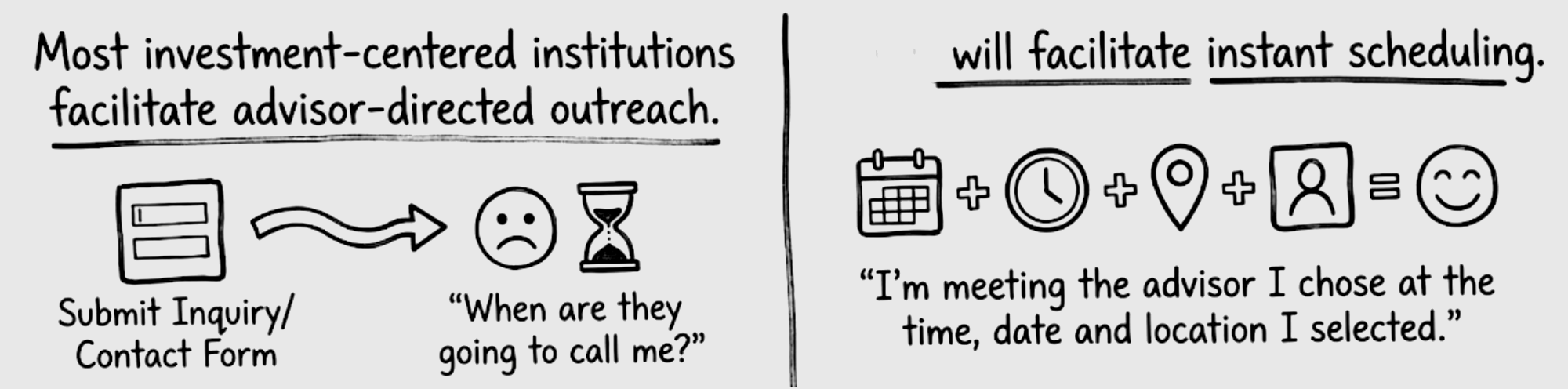
The organization only offers an advisor-directed outreach.
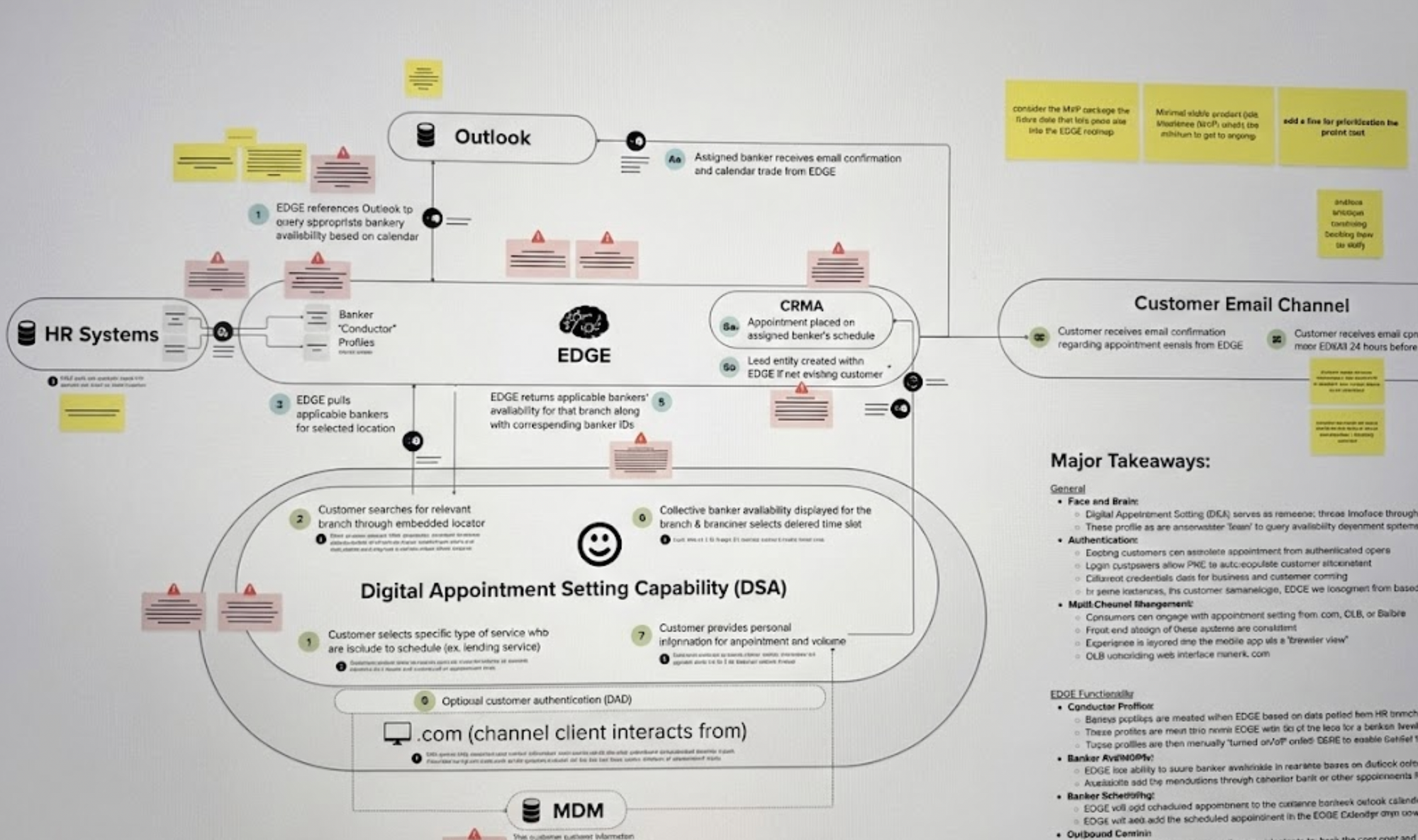
Scheduling logic and ownership were fragmented across channels, teams, and systems.
The Process
Quantitative Client Analysis:
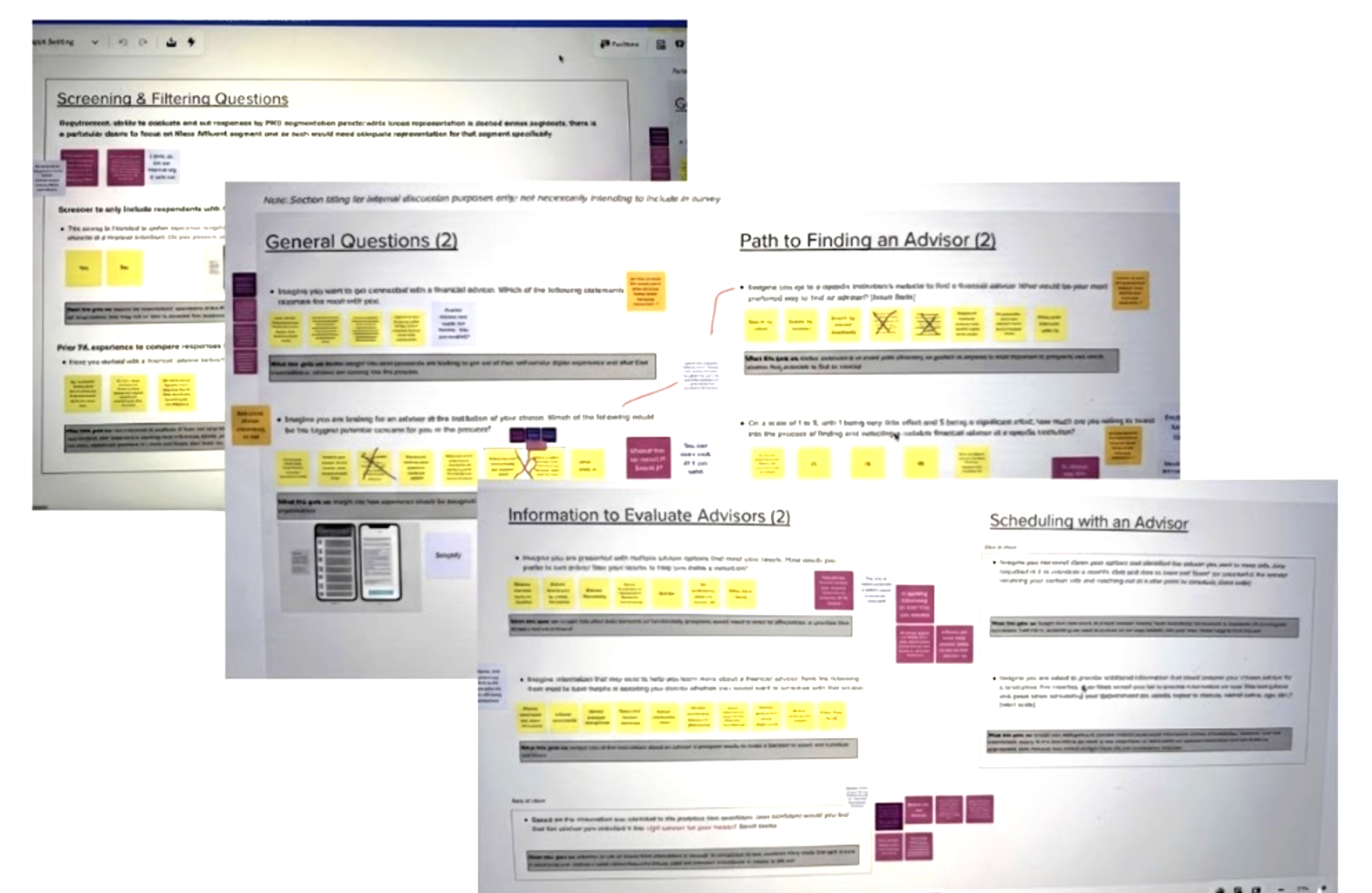
Deployed logic-based surveys 1Q platform to Mass Affluent segments to identify critical pain points and decision-making drivers, ultimately mapping the ideal customer journey for finding and booking a financial advisor.
Advisor Workflow Audits:
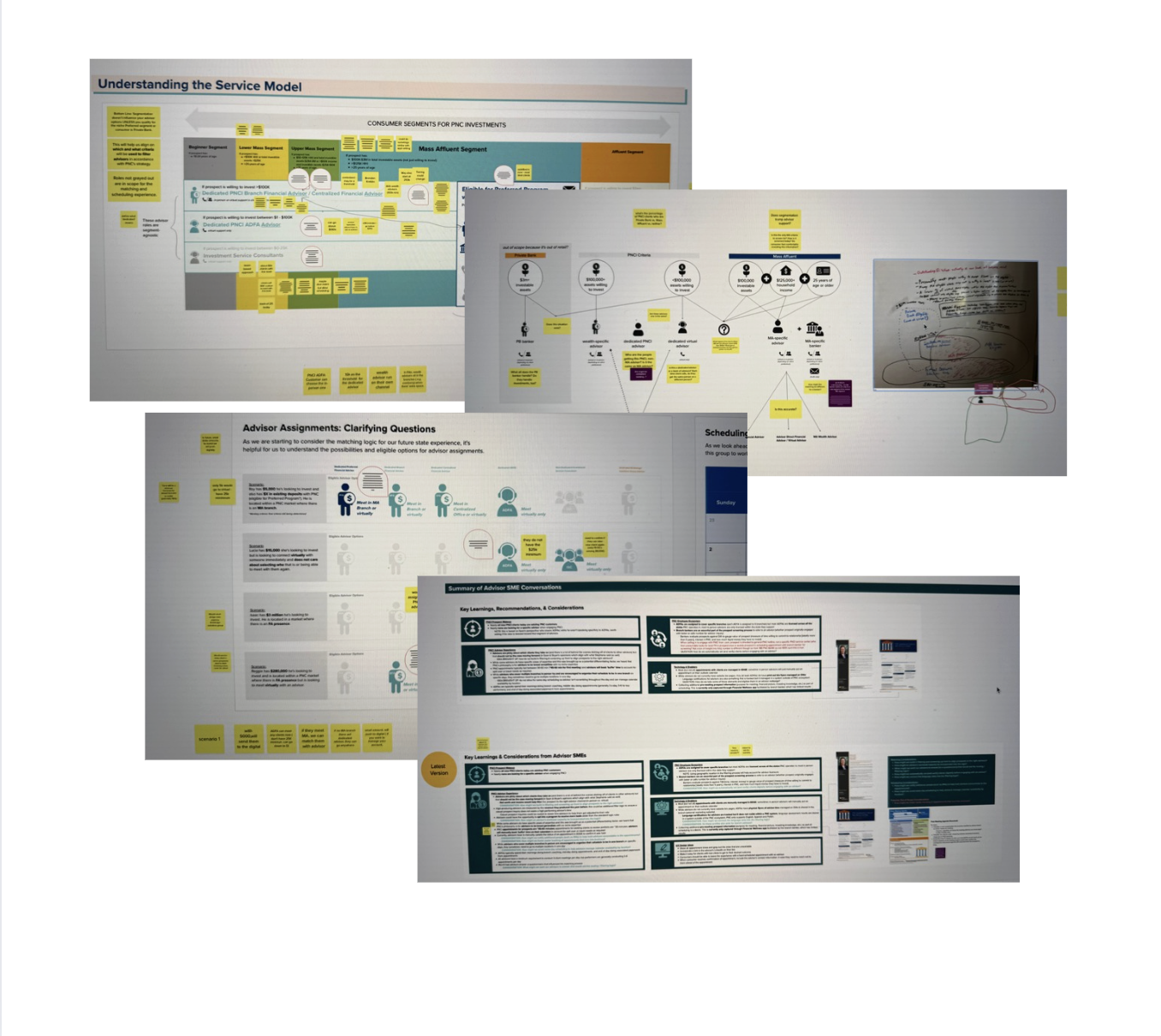
Conducted 1:1 field interviews and focus groups to understand the "supply side."
- Key Insight: Advisors operate as broad generalists with manual, fragmented scheduling workflows, making them difficult to categorize algorithmically.
Competitive Landscape:
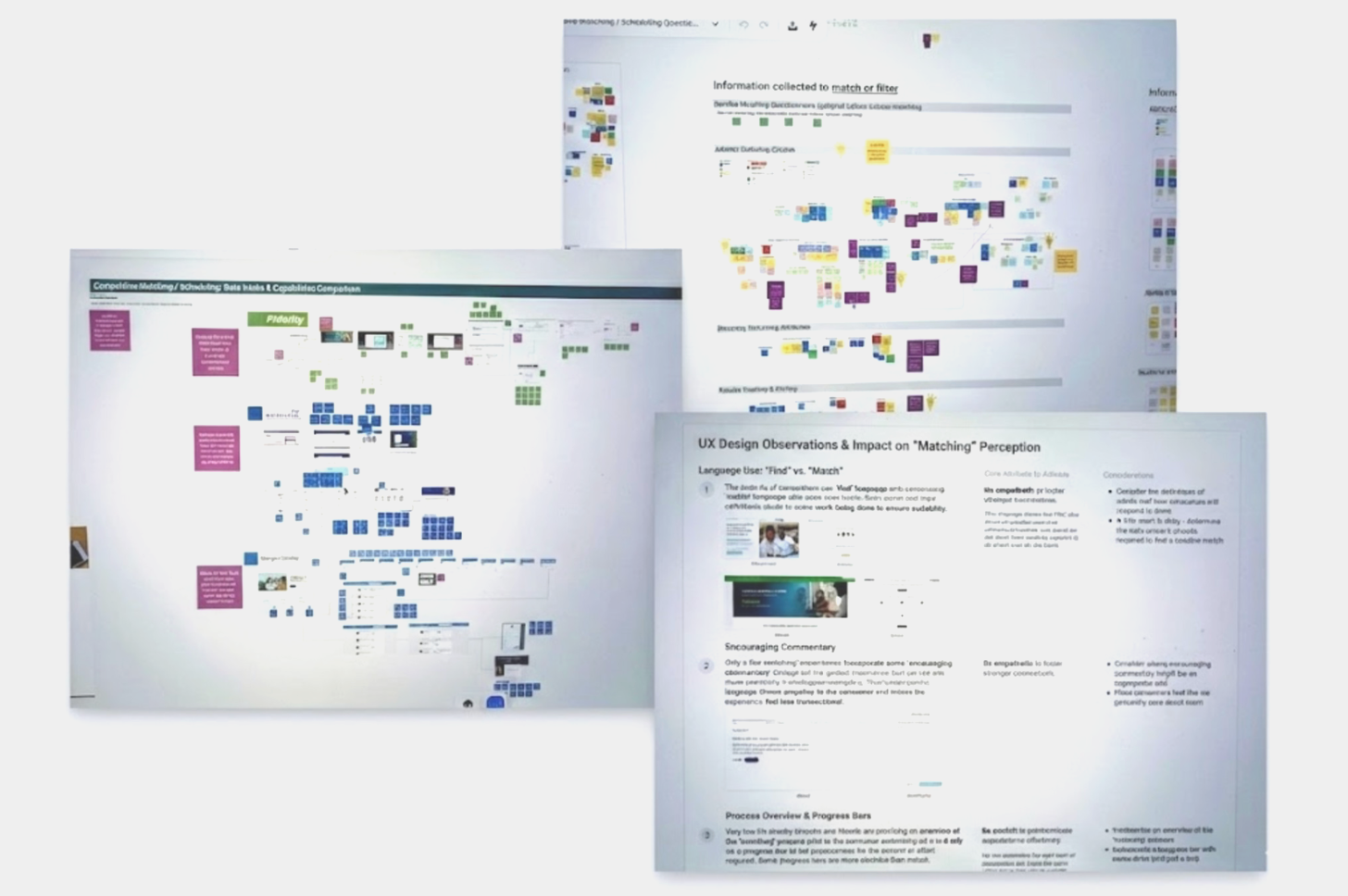
Synthesized industry patterns on data intake and the psychological impact of "matching vs. choosing" UX.
Operational Reality Check:
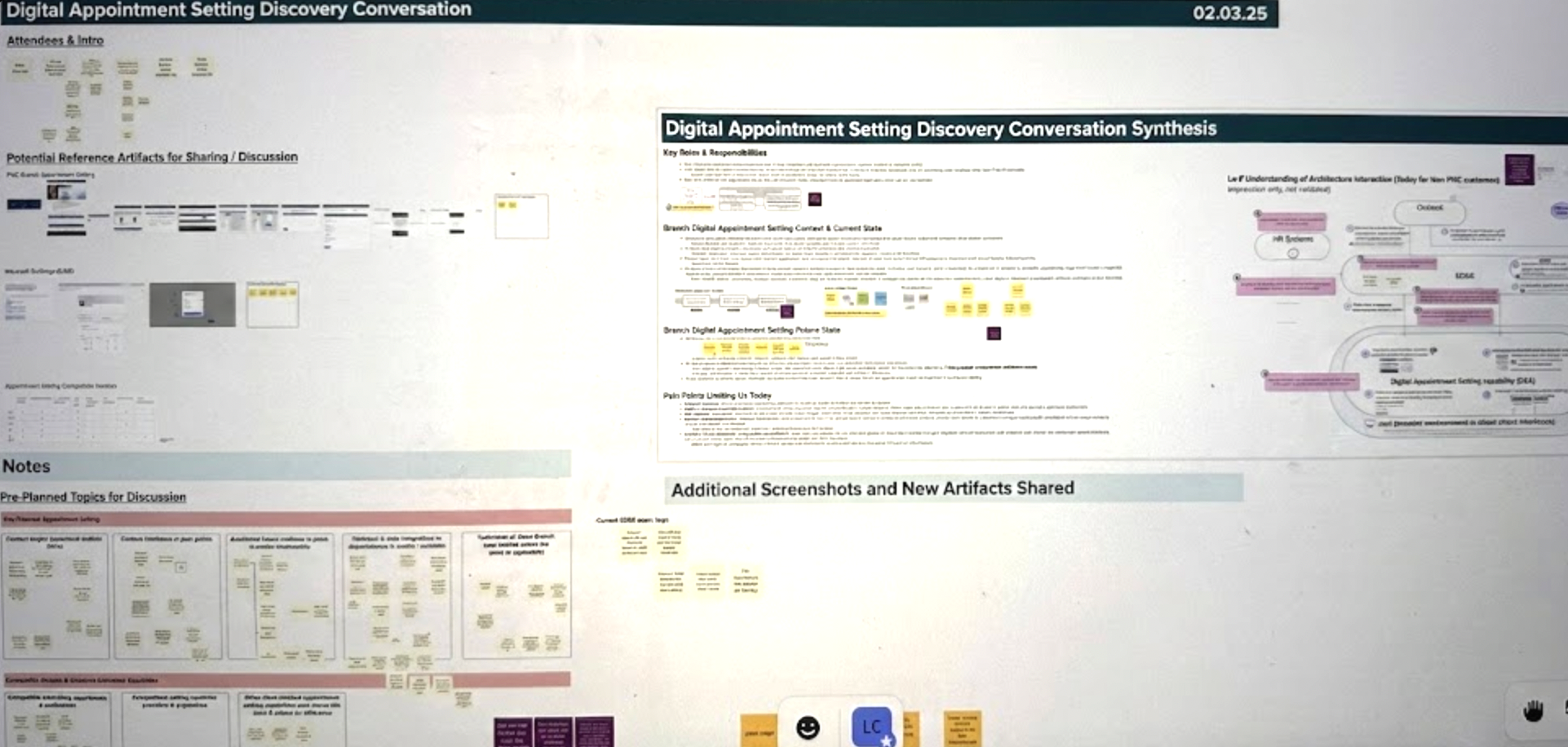
Mapped high-level business ambitions against actual platform capabilities and data maturity.
- The Critical Gap: Discovered that the organization’s backend systems could not support "Algorithmic Matching" because advisor data was not sufficiently distinguished (tagged) to power a recommendation engine.
Strategic Reframing:
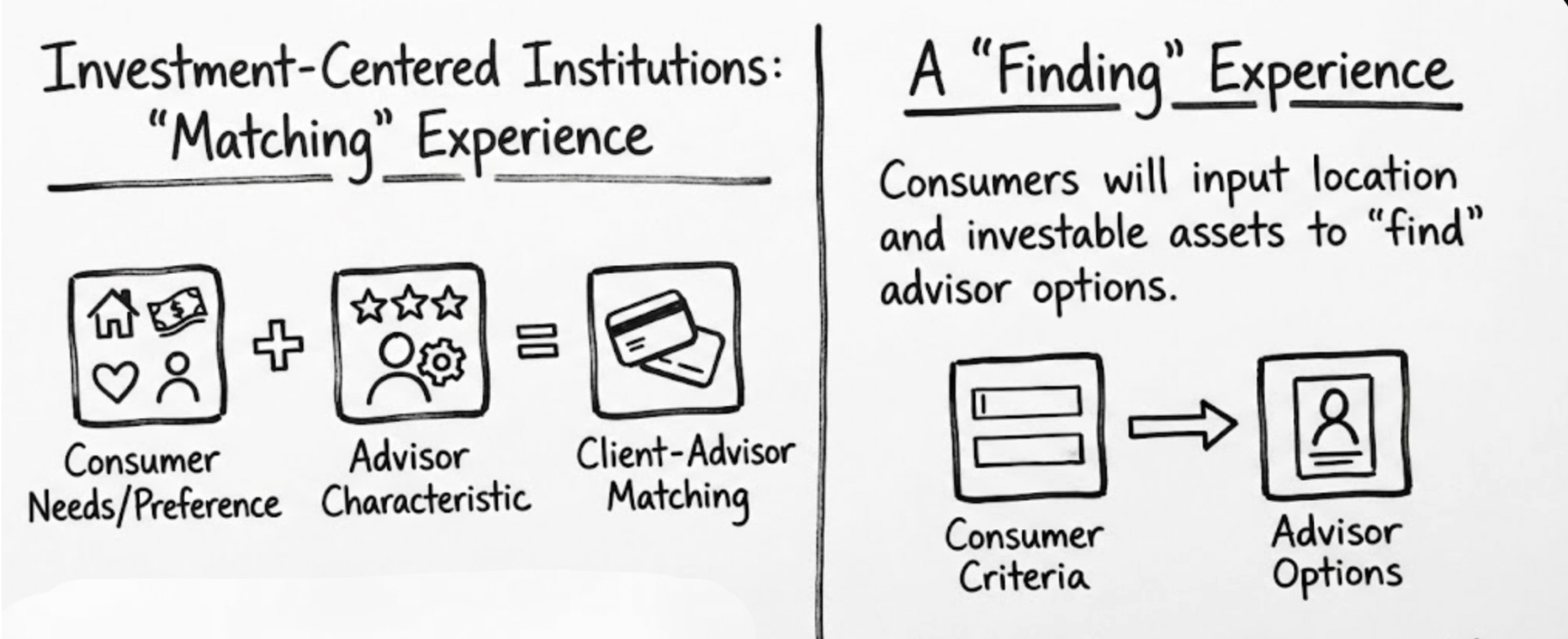
- Navigating the Roadblock: Instead of forcing an unbuildable "Matching" solution, I reframed the core problem.
- The Pivot: Shifted the strategy to an "Advisor Finding" experience. This allowed us to:
- Deliver immediate value to clients (MVP) without waiting for multi-year data projects.
- Define a roadmap for the organization to build the necessary data foundation for future matching capabilities withAI.
The Solution
A Validated "Search & Schedule" Ecosystem
The Strategic Pivot:
We shifted the product vision from a technically unfeasible "Algorithmic Matching" model to a user-empowered "Advisor Finding" Service.
This re-alignment anchored the experience on instant online booking—the primary user need—while bypassing the organization's data maturity bottlenecks.
Key Strategic Deliverables
- Service Architecture & MVP Scope: Defined a buildable "As-Is" service model that prioritized findability and booking speed, bridging the gap between business ambition and technical reality.
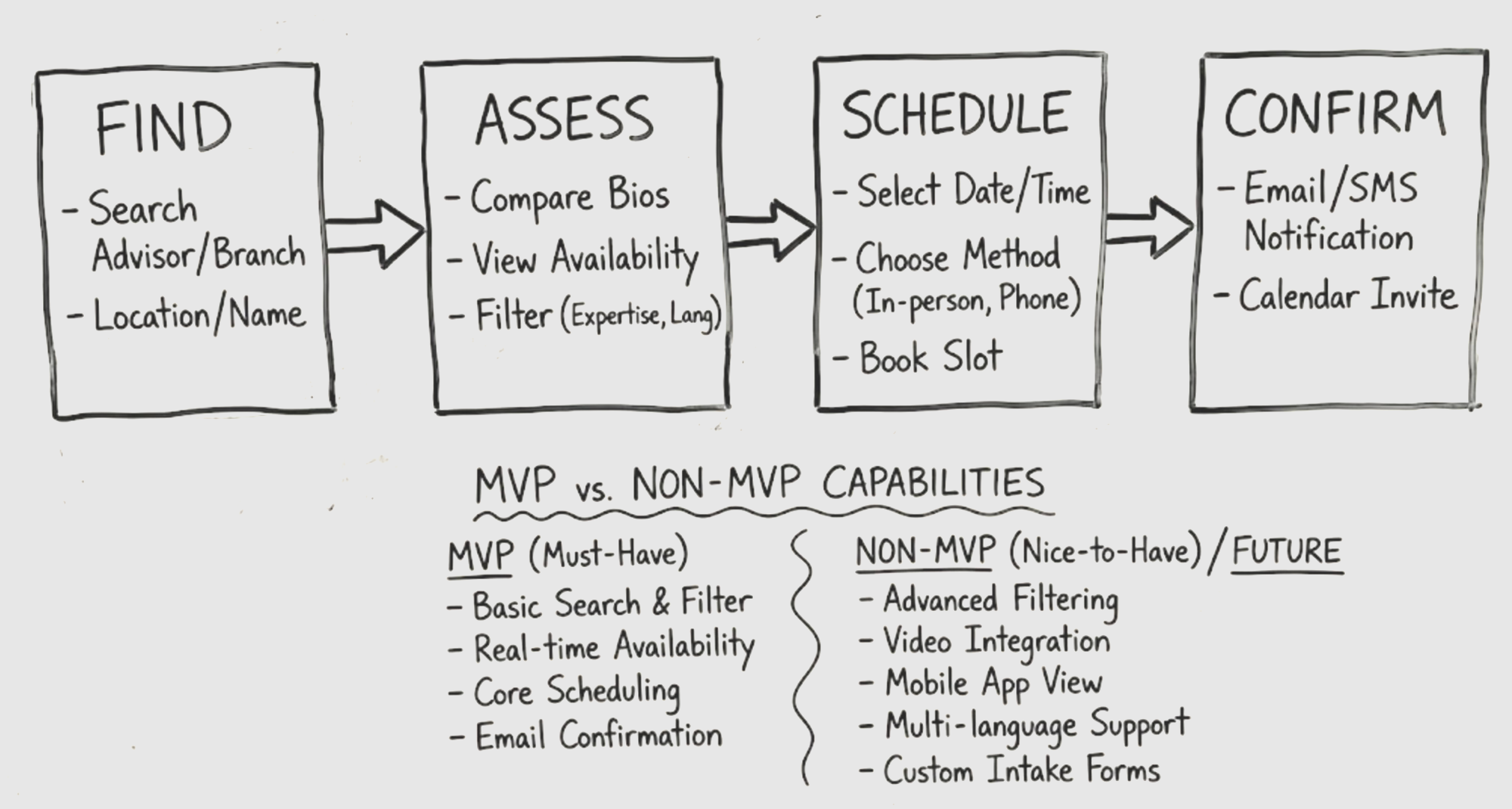
- Strategic Guardrails (What Not To Build): Established explicit "Out-of-Scope" definitions to prevent scope creep and manage stakeholder expectations regarding "AI matching," protecting the engineering timeline.
- End-to-End Experience Flows: Delivered mid-fidelity service flows and wireframes that visualized the complete client path—from external referral to confirmed calendar appointment.
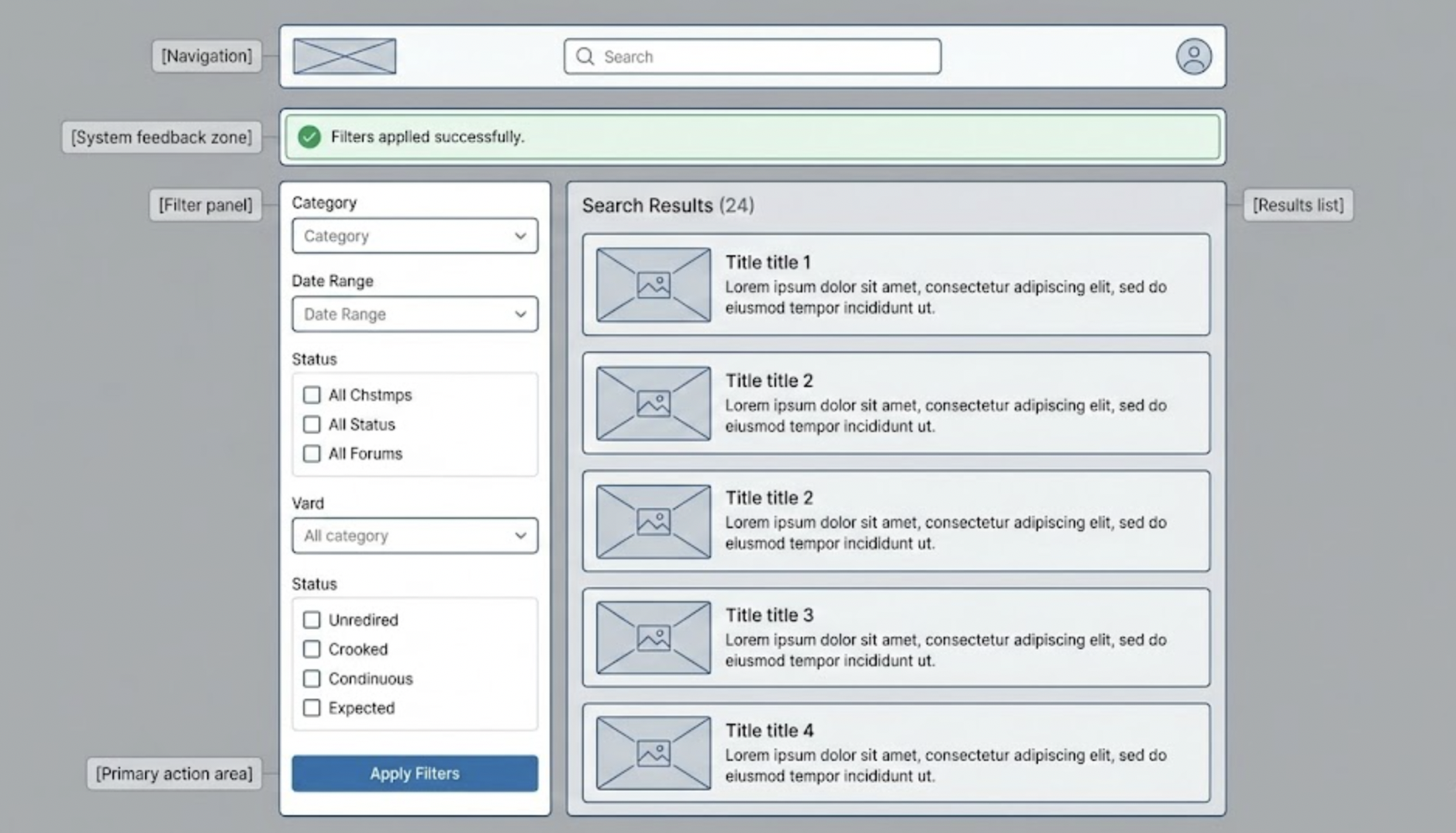
Reconstructed low-fidelity visualization based on original internal wireframes (IP-safe abstraction).
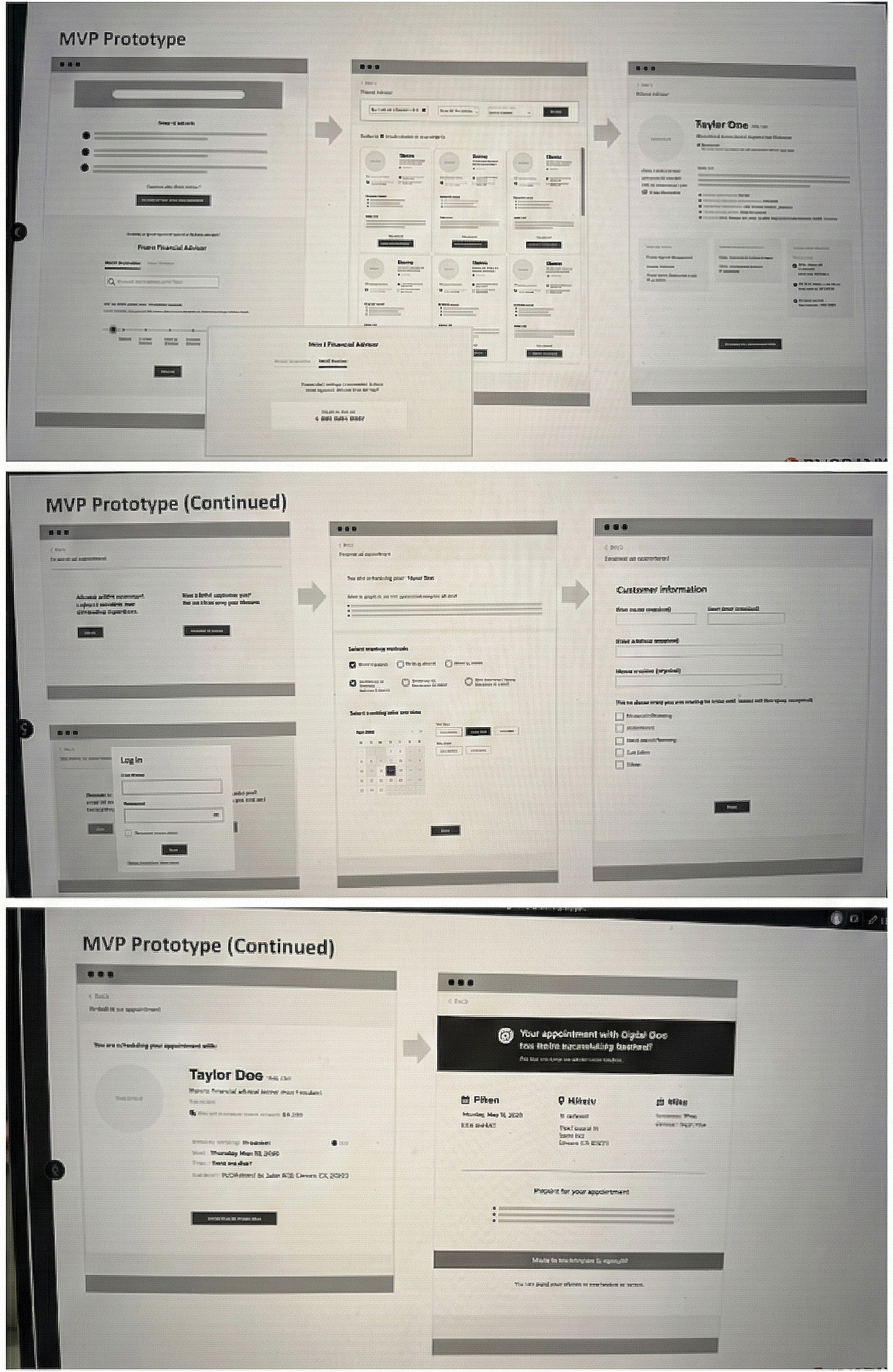
Reconstructed mid-fidelity visualization based on original internal wireframes (IP-safe abstraction).
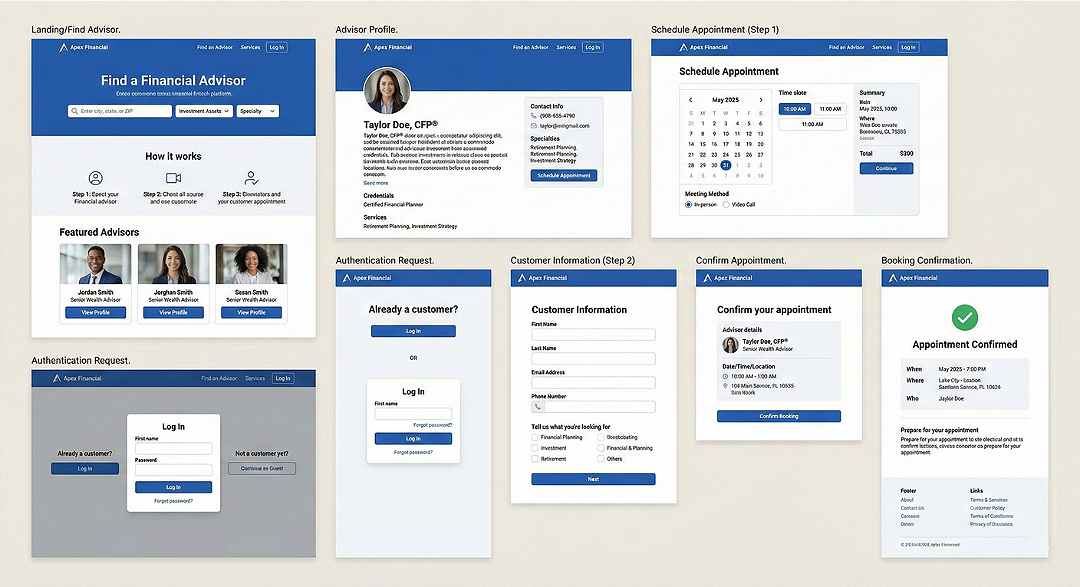
Reconstructed high-fidelity visualization based on original internal prototype (IP-safe abstraction).
- Capability Roadmap & Vendor Evaluation: Established a MoSCoW-based prioritization framework (Must/Should/Could/Won’t) to evaluate internal tech vs. external vendor solutions. This roadmap aligned stakeholders on the critical "Must Have" capabilities for MVP launch while deferring non-essential features to future phases.
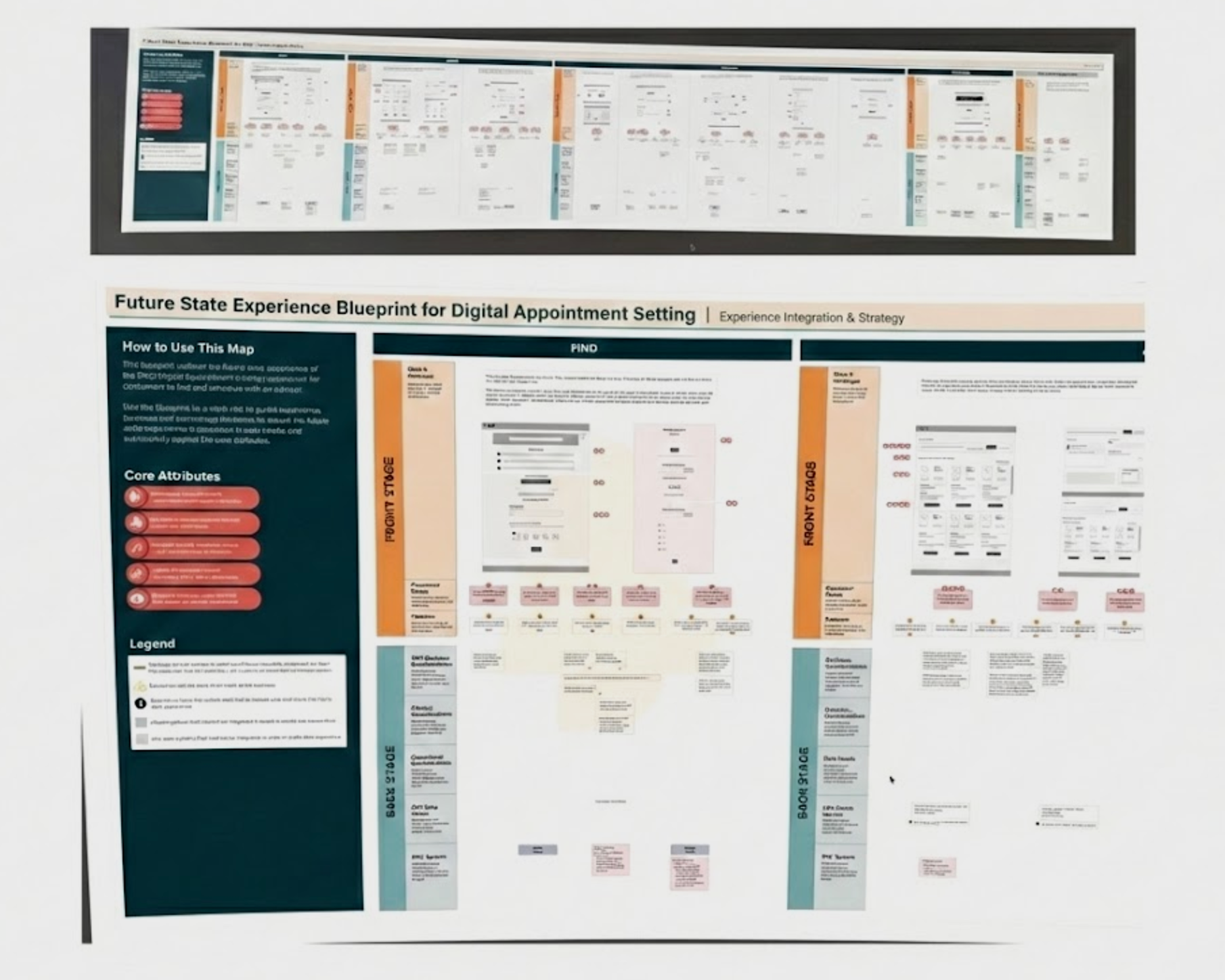
Future-state Service Blueprint
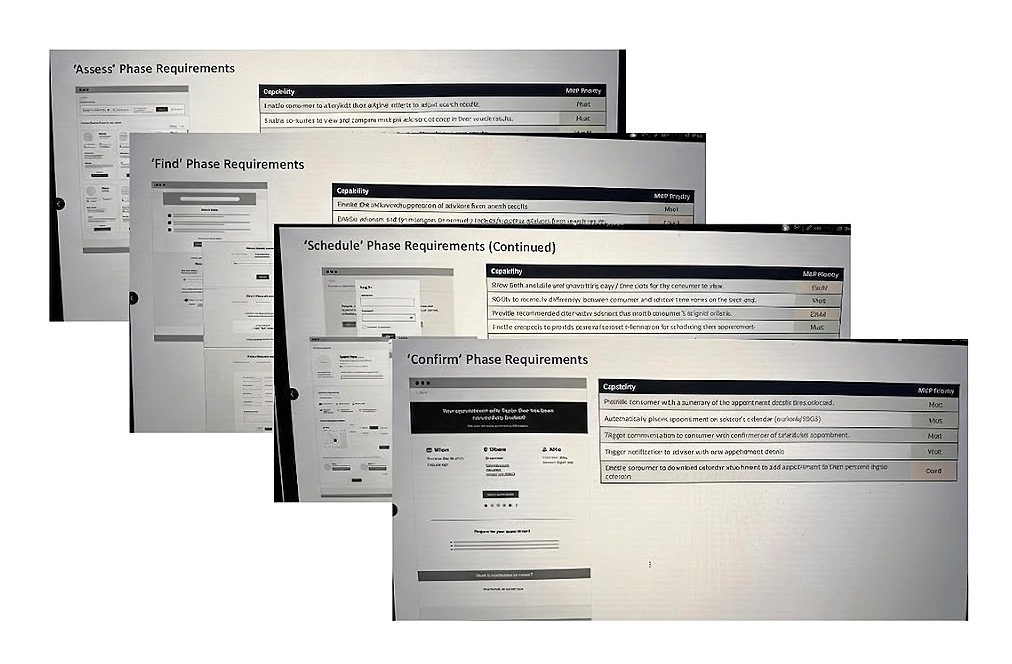
A listing of requirements that can be used to evaluate existing tech and vendor solutions for the digital appointment setting experience.
The Impact
Strategic Clarity & Risk Mitigation
- Diagnosed Critical Strategic Gaps: Uncovered a fundamental disconnect between the business’s "AI Matching" aspirations and the actual data infrastructure, protecting the organization from investing in a strategy based on false assumptions.
- Protected Engineering Resources: Prevented costly development cycles on undefined capabilities. By explicitly defining what was out of scope, I ensured engineering efforts were focused solely on a buildable, high-value MVP.
- Sequenced Organizational Maturity: Shifted the stakeholder mindset from an "all-or-nothing" launch to a phased maturity roadmap. This allowed the business to capture immediate value (Online Booking) today, while laying the necessary data groundwork for the future "Matching" vision.
- Operationalized Ambiguity: Transformed vague business goals into a concrete decision framework, forcing the necessary "hard calls" between blue-sky aspiration and technical feasibility.
The Learning:
- Scheduling is a Service, Not Just a Feature:
"Booking an appointment" is rarely just a UI challenge—it is a complex negotiation of advisor availability, business logic, and client trust. Designing the interface required first redesigning the operational rules governing advisor time.
- Artifacts Drive Alignment:
The Service Blueprint was more than a deliverable; it was a negotiation tool. By visualizing the "backstage" technical constraints alongside the "front-stage" client experience, I was able to break down silos between the Technology and Business teams and force decisions on MVP scope.
- Visualizing the Invisible:
Stakeholders often underestimate operational complexity. Visualizing the "backstage" processes in the Service Blueprint was the turning point that secured buy-in for a realistic MVP.
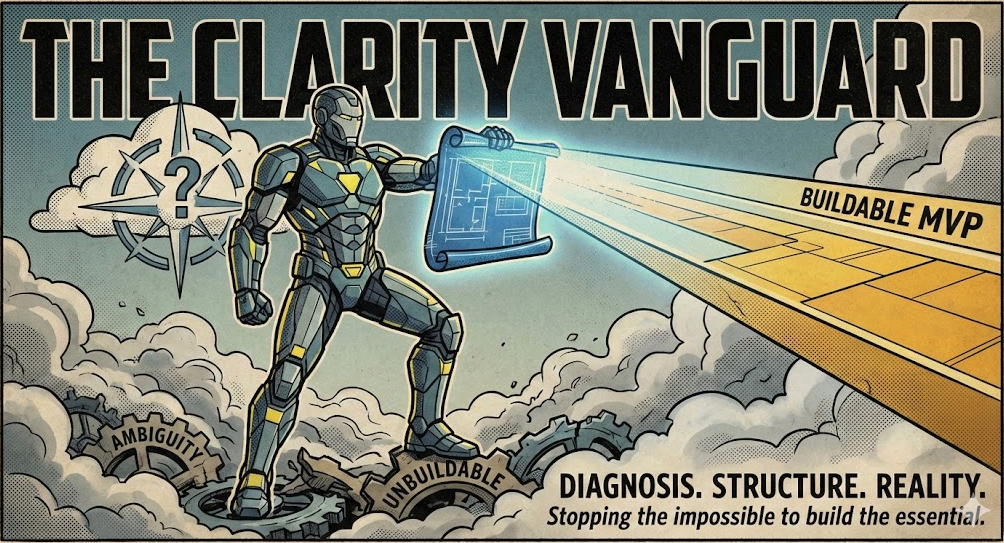
If this project was a super hero, who'd it be?
If this project were a superhero, it wouldn't be one with flashy powers like flight or heat vision. It would be a grounded, cerebral hero whose superpower is seeing the truth through the noise.
It would be The Clarity Vanguard.
Like a master detective or a structural engineer, this hero’s power is Investigation and Structure. When the organization was lost in a fog of "unbuildable" fantasies, this project was the force that landed, diagnosed the reality, and used a "blueprint of truth" to forge a clear, practical path forward. It protected the team from chaos and built a foundation for the future.